

Description
1. Taxonomy and Nomenclature
- Scientific Name: Psittacula alexandri
- Common Names: Moustached Parakeet, Red-Breasted Parakeet
- Family: Psittaculidae
- Named After: The characteristic red patch on the breast and the “moustache-like” black markings on the face.
2. Physical Description
- Size: Medium-sized parrot, measuring 33–38 cm (13–15 inches) in length, including the tail.
- Weight: Approximately 133–168 grams.
- Plumage:
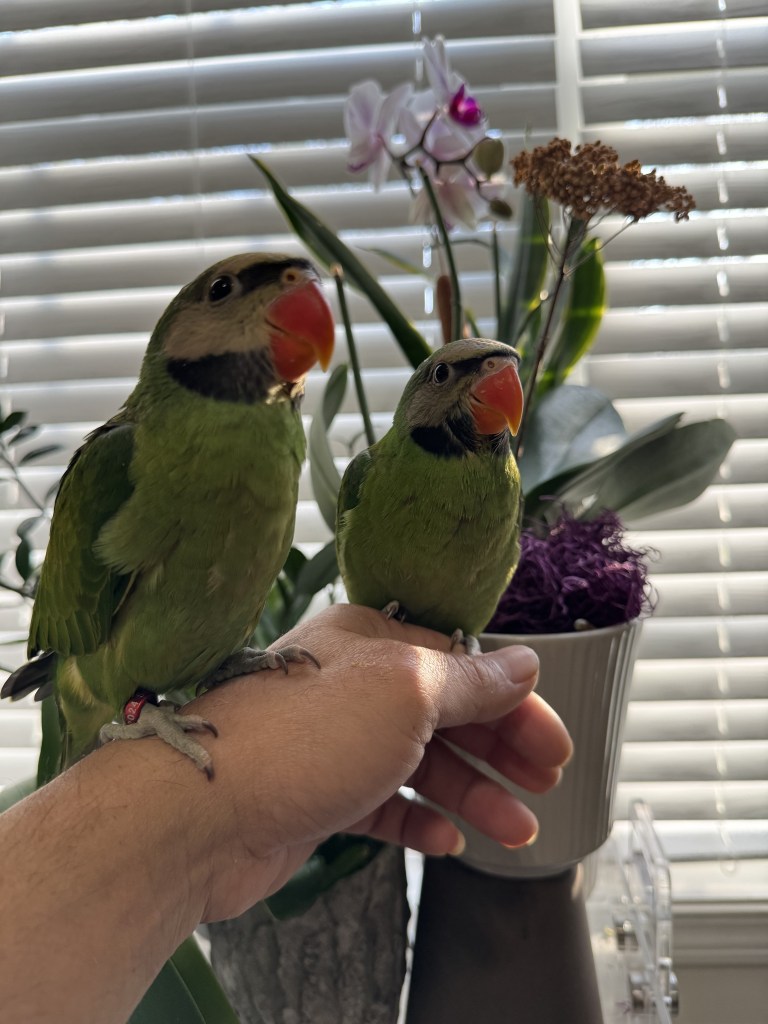
- Pale blue-grey head.
- Pinkish breast with a red patch varying by subspecies.
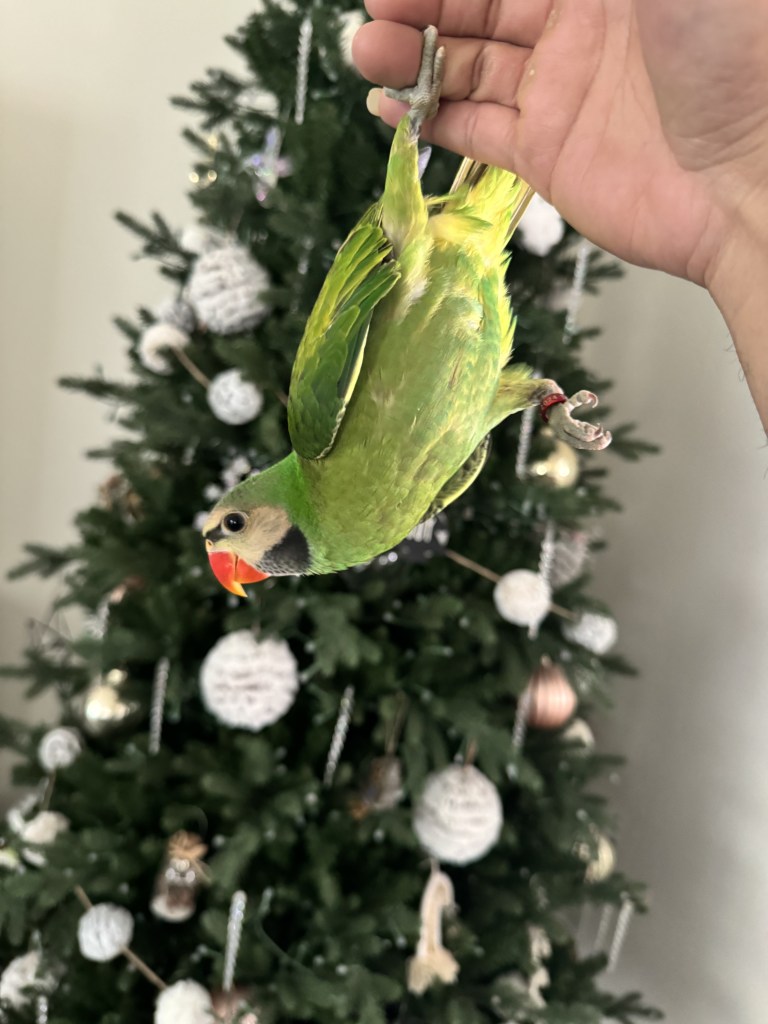
- Green body and wings with darker green shades on the back.
- Distinctive Features:
- Facial Markings: Black line extending from the beak to the eye, resembling a moustache.
- Beak: Bright red with a yellow tip.
- Tail: Long, with bluish hues and pale yellow tips.
3. Natural Habitat and Distribution
- Native Range: Southeast Asia, including countries like India, Indonesia, Myanmar, and parts of Thailand.
- Introduced Populations: Found in regions like the Philippines and localized populations due to captivity escapes.
- Habitat: Prefers tropical and subtropical forests, woodlands, and open hilly areas.
4. Behavior and Diet
- Social Structure: Highly social, often seen in flocks of 20–60 birds.
- Vocalization: Known for loud, trumpet-like calls, shrieks, and whistles.
- Diet:
- Wild Diet: Fruits, seeds, nuts, berries, and blossoms.
- Captivity Diet: High-quality pellets, fresh fruits (e.g., apples, bananas), vegetables, and occasional seeds.
5. Lifespan and Reproduction
- Lifespan: 20–30 years with proper care.
- Breeding:
- Season: Varies by region but typically during spring.
- Nesting: Prefers tree cavities.
- Clutch Size: 3–4 eggs per clutch.
- Incubation: Eggs are incubated for about 22–24 days.
6. Talking Ability
- Clarity: Their speech is not as clear as some other talking parrots but is recognizable.
- Vocabulary: They can learn and repeat a handful of words and short phrases.
7. Suitability as Pets
Considerations: Their loud calls and chewing tendencies make them better suited for experienced bird owners.
Care Requirements:
Require large cages or aviaries for ample space.
Need mental stimulation and toys to prevent boredom.
Personality: Intelligent, playful, and affectionate.
 vicaviary