Description
1. Taxonomy and Nomenclature
- Scientific Name: Psephotellus dissimilis
- Common Names: Hooded Parrot
- Family: Psittaculidae
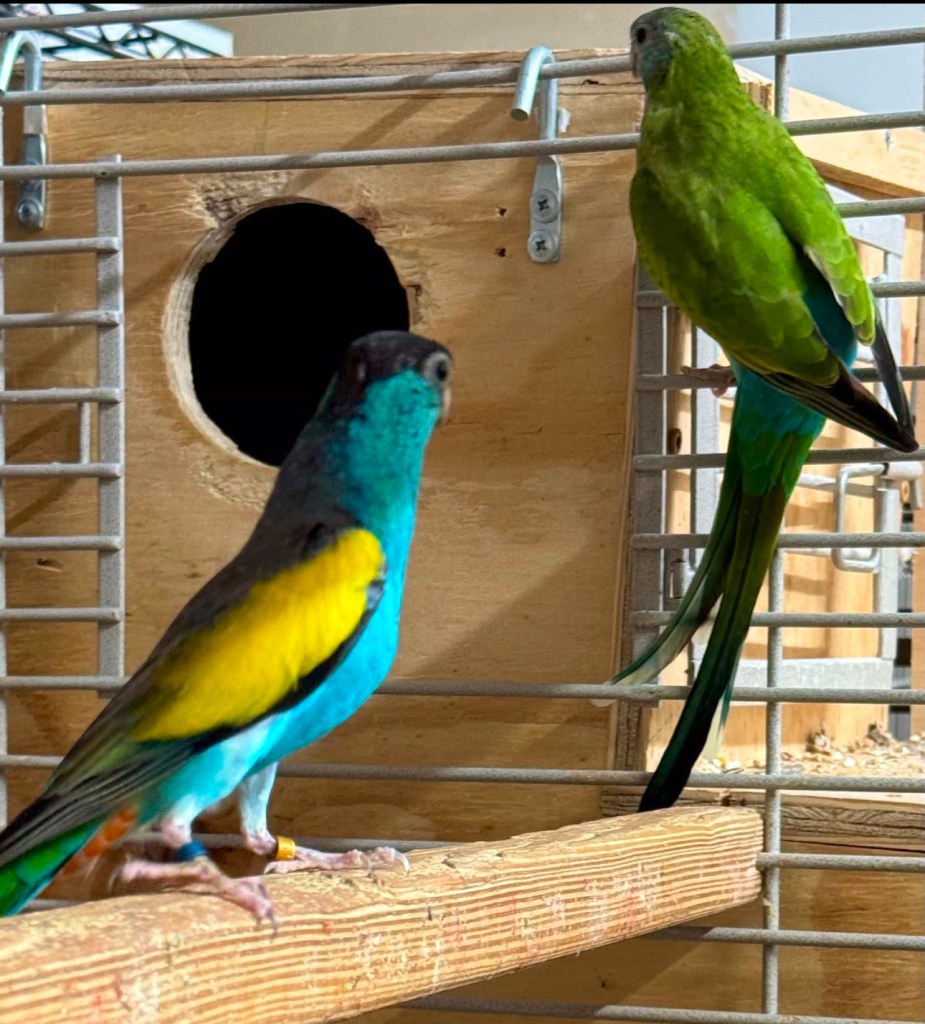
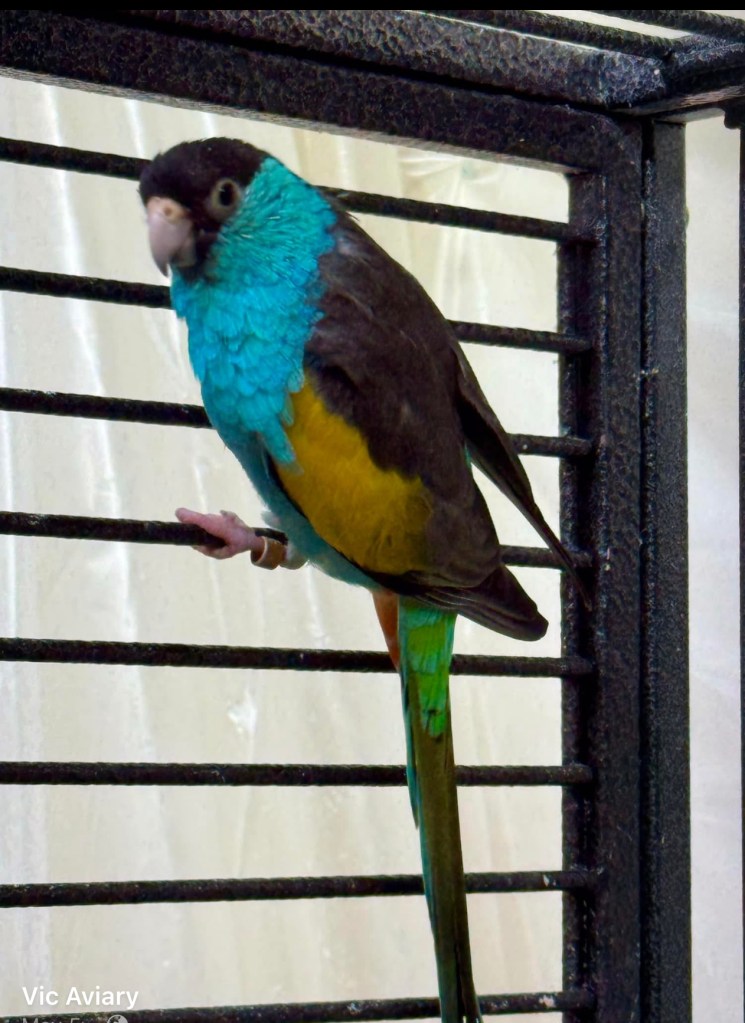
- Named After: The distinctive “hood” of dark plumage on its head, contrasting with its colorful body.
2. Physical Description
- Size: Small parrot, measuring about 25 cm (10 inches) in length.
- Weight: Approximately 50–60 grams.
- Plumage:
- Males: Black “hood” covering the head and upper neck, vibrant green body, and bright blue shoulders.
- Females: Duller green with a less prominent hood and pale green underparts.
- Both sexes have a yellow patch on the belly.
- Distinctive Features:
- Beak: Pale grey and slightly curved.
- Eyes: Dark brown, expressive and alert.
- Tail: Medium length, with blue and green shades.
3. Natural Habitat and Distribution
- Native Range: Northern Australia, particularly in open woodlands and savanna regions.
- Habitat: Prefers areas with access to termite mounds, which they use for nesting.
4. Behavior and Diet
- Social Structure: Often seen in pairs or small groups; larger flocks form during feeding or migration.
- Vocalization: Soft chattering calls, with occasional high-pitched trills.
- Diet:
- Wild Diet: Seeds, grasses, and fruits.
- Captivity Diet: High-quality pellets, fresh fruits (e.g., apple, pear), vegetables, and sprouted seeds.
5. Lifespan and Reproduction
- Lifespan: 10–15 years in the wild, up to 20 years in captivity with proper care.
- Breeding:
- Season: Breeds during the dry season, typically April to August.
- Nesting: Unique among parrots for nesting in termite mounds to provide insulation and protection.
- Clutch Size: 3–6 eggs per clutch.
- Incubation: Eggs are incubated for about 20–23 days.
6. Talking Ability
- Clarity: Limited ability to mimic human speech, but capable of learning a few clear sounds.
- Vocabulary: Small, with simple words and phrases; more known for their natural calls.
7. Suitability as Pets
May require specialized care due to their unique nesting habits and social needs.
Care Requirements:
Need a spacious cage with climbing opportunities and foraging toys.
Require regular interaction to prevent boredom and behavioral issues.
Personality: Active, inquisitive, and relatively quiet compared to other parrots. They enjoy exploring and socializing with their owners.
Considerations:
Suitable for bird enthusiasts who can provide a stimulating environment and proper diet.
 vicaviary