Description
1. Taxonomy and Nomenclature
- Scientific Name: Psittacula derbiana
- Common Names: Derbyan Parakeet, Lord Derby’s Parakeet
- Family: Psittaculidae
- Named After: Edward Stanley, 13th Earl of Derby, a British naturalist and collector.
2. Physical Description
- Size: Large parakeet, measuring 40–50 cm (16–20 inches) in length, including the tail.
- Weight: Approximately 200–240 grams.
- Plumage:
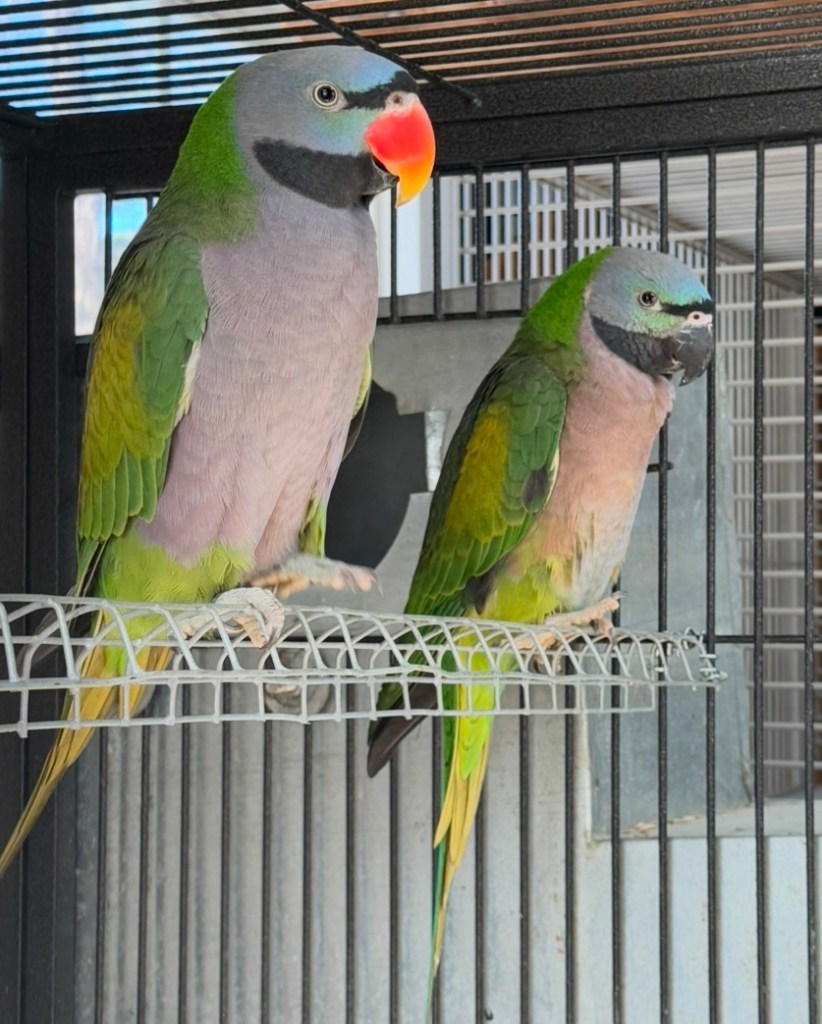
- Bluish-purple head.
- Green body with darker green wings and back.
- Pale yellow underside of the tail.
- Distinctive Features:
- Facial Markings: Black patch extending from the beak to below the eyes.
- Beak: Males have a bright red upper mandible and a yellow lower mandible; females have a black beak.
- Tail: Long and tapered with shades of blue and green.
3. Natural Habitat and Distribution
- Native Range: Found in the forests of northeast India, southwestern China, and parts of Tibet.
- Habitat: Prefers montane forests and subtropical woodlands, typically at altitudes of 1,500–4,000 meters.
4. Behavior and Diet
- Social Structure: Usually seen in pairs or small flocks in the wild.
- Vocalization: Known for loud, high-pitched calls and chatter.
- Diet:
- Wild Diet: Seeds, fruits, berries, nuts, and blossoms.
- Captivity Diet: A balanced diet of pellets, fresh fruits (e.g., pomegranate, grapes), vegetables, and occasional nuts or seeds.
5. Lifespan and Reproduction
- Lifespan: 25–30 years with proper care.
- Breeding:
- Season: Breeds in the spring or early summer.
- Nesting: Nests in tree cavities, laying 2–4 eggs per clutch.
- Incubation: Eggs are incubated for about 23–25 days.
6. Talking Ability
- Clarity: Their speech is clearer than many parrot species, making their mimicry easy to understand.
- Vocabulary: They can learn a wide range of words and phrases with consistent training.
7. Suitability as Pets
Considerations: Their loud calls and active nature require dedicated care and an experienced owner.
Care Requirements:
Need a spacious cage or aviary and plenty of toys for mental stimulation.
Require regular interaction and attention from their owners.
Personality: Intelligent, curious, and social. They can form strong bonds with their human companions.
 vicaviary