White-Bellied Caique
Description
1. Taxonomy and Nomenclature
- Scientific Name: Pionites leucogaster
- Common Names: White-Bellied Caique, White-Bellied Parrot
- Family: Psittacidae
- Named After: Its distinctive white belly, contrasting with its colorful plumage.
2. Physical Description
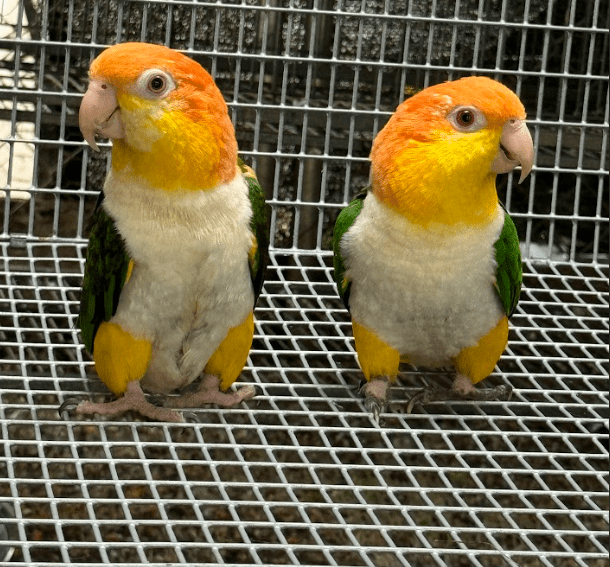
- Size: Small parrot, measuring 23 cm (9 inches) in length.
- Weight: Approximately 150–170 grams.
- Plumage:
- White belly and chest.
- Green back, wings, and tail.
- Yellow-orange thighs and cheeks, with a yellow nape.
- Black crown on the head.
- Distinctive Features:
- Beak: Pale horn-colored, medium-sized.
- Eyes: Dark brown, with a curious and expressive appearance.
- Tail: Short and squared.
3. Natural Habitat and Distribution
- Native Range: Found in the tropical forests of South America, including Brazil, Bolivia, and Peru.
- Habitat: Prefers lowland rainforests and edges of forested areas. Often found in regions near rivers.
4. Behavior and Diet
- Social Structure: Highly social and often seen in small groups or pairs.
- Vocalization: Known for high-pitched chirps, whistles, and squawks.
- Diet:
- Wild Diet: Fruits, seeds, nuts, berries, and blossoms.
- Captivity Diet: A balanced mix of high-quality pellets, fresh fruits (e.g., papaya, banana), vegetables, and occasional nuts.
5. Lifespan and Reproduction
- Lifespan: 25–30 years with proper care.
- Breeding:
- Season: Typically breeds during the dry season.
- Nesting: Nests in tree cavities.
- Clutch Size: 3–4 eggs per clutch.
- Incubation: Eggs are incubated for about 24–26 days.
6. Talking Ability
- Clarity: Limited ability to mimic human speech; their mimicry is not very clear.
- Vocabulary: Can learn a few words and simple phrases, but their strength lies in their playful vocalizations rather than talking.
7. Suitability as Pets
Suitable for experienced bird owners who can dedicate time and care to their needs.
Care Requirements:
Require a spacious cage or aviary with toys, perches, and climbing opportunities for mental and physical stimulation.
Thrive on regular interaction and attention from their owners.
Personality: Extremely playful, energetic, and affectionate. Known for their clown-like antics and curious nature.
Considerations:
They can be noisy and require a lot of social interaction to prevent boredom or behavioral issues.
Black-Headed Caique
Description
1. Taxonomy and Nomenclature
- Scientific Name: Pionites melanocephalus
- Common Names: Black-Headed Caique, Black-Capped Parrot
- Family: Psittacidae
- Named After: The striking black coloration on their head, which contrasts with their vibrant body plumage.
2. Physical Description
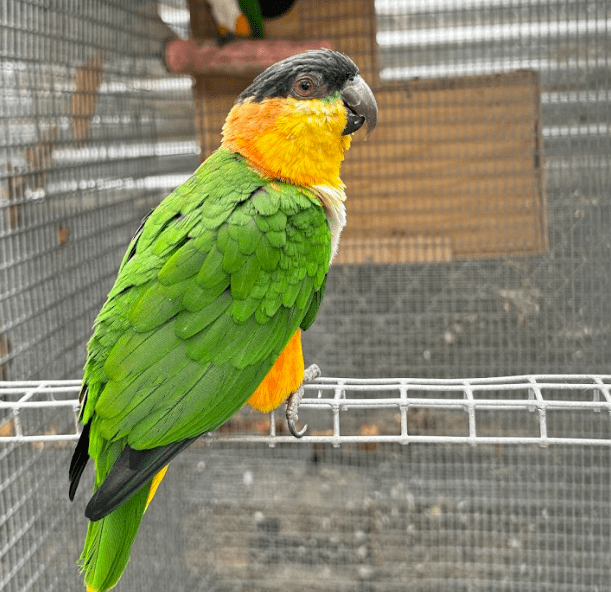
- Size: Small parrot, measuring 23 cm (9 inches) in length.
- Weight: Approximately 130–170 grams.
- Plumage:
- Black head and crown.
- Green back, wings, and tail.
- Bright orange-yellow thighs, flanks, and cheeks.
- White belly and chest.
- Distinctive Features:
- Beak: Pale horn-colored, medium-sized.
- Eyes: Orange-red, adding to their striking appearance.
- Tail: Short and squared.
3. Natural Habitat and Distribution
- Native Range: Found in the tropical forests of northern South America, including countries like Venezuela, Colombia, Ecuador, and northern Brazil.
- Habitat: Prefers lowland rainforests and forest edges. Often seen near rivers and wetlands.
4. Behavior and Diet
- Social Structure: Highly social and often seen in small groups or pairs.
- Vocalization: Known for their high-pitched chirps, whistles, and squawks, often used to communicate with flock members.
- Diet:
- Wild Diet: Fruits, seeds, nuts, berries, and blossoms.
- Captivity Diet: A balanced mix of high-quality pellets, fresh fruits (e.g., mango, apple), vegetables, and occasional nuts.
5. Lifespan and Reproduction
- Lifespan: 25–30 years with proper care.
- Breeding:
- Season: Typically breeds during the dry season.
- Nesting: Nests in tree cavities.
- Clutch Size: 3–4 eggs per clutch.
- Incubation: Eggs are incubated for about 24–26 days.
6. Talking Ability
- Clarity: Limited ability to mimic human speech; their mimicry is not very clear.
- Vocabulary: Can learn a few words and simple phrases, but they are better known for their expressive vocalizations and sounds.
7. Suitability as Pets
Suitable for experienced bird owners who can dedicate time and care to their needs.
Care Requirements:
Require a spacious cage or aviary with toys, perches, and climbing opportunities for mental and physical stimulation.
Thrive on regular interaction and attention from their owners.
Personality: Extremely playful, energetic, and affectionate. Known for their clown-like antics and curious nature.
Considerations:
They can be noisy and require a lot of social interaction to prevent boredom or behavioral issues.
 vicaviary