Description
Alexandrine Parrot (Psittacula eupatria)
1. Taxonomy and Nomenclature:
- Scientific Name: Psittacula eupatria
- Common Names: Alexandrine parrot, Alexandrine parakeet
- Family: Psittaculidae
- Named After: Alexander the Great, who is believed to have transported these birds from Punjab to European and Mediterranean regions, where they became prized possessions among royalty and nobility.
2. Physical Description:
- Size: Medium to large parrot, measuring approximately 56 to 62 cm (22 to 24 inches) in length, including the tail.
- Weight: Ranges between 200 to 300 grams.
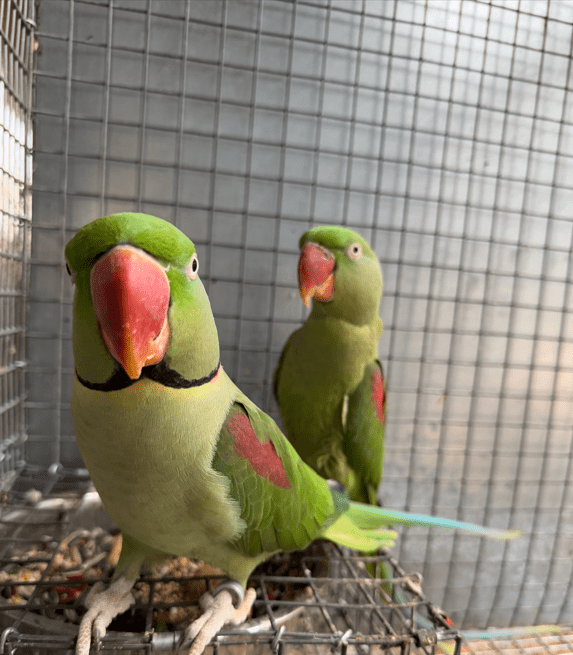
- Plumage: Predominantly green with a bluish-grey sheen on the cheeks and nape.
- Distinctive Features:
- Neck Ring: Adult males exhibit a black stripe across the lower cheeks, joining a pink band on the nape, forming a neck ring. Females and juveniles typically lack this feature.
- Shoulder Patch: Both sexes have a maroon-red patch on their shoulders.
- Tail: Long and tapered with blue and yellow hues.
- Beak: Large, powerful, and red with a paler tip.
3. Natural Habitat and Distribution:
- Native Range: South and Southeast Asia, including countries like India, Sri Lanka, Pakistan, and parts of Southeast Asia.
- Introduced Populations: Established in various parts of Europe and Hong Kong.
- Habitat: Prefers both dry and wet forests, typically in lowlands but occasionally in foothills.
4. Behavior and Diet:
- Social Structure: Highly social birds that live in pairs or small flocks in the wild.
- Vocalization: Known for their loud, piercing screeches and screams.
- Diet: In the wild, they feed on a variety of seeds, fruits, nuts, berries, and blossoms. In captivity, a balanced diet should include high-quality pellets, fresh fruits, vegetables, and occasional seeds.
5. Lifespan and Reproduction:
- Lifespan: With proper care, Alexandrine parrots can live up to 30 years or more in captivity.
- Breeding: Breeding season varies by region; typically, they nest in tree cavities and lay 2 to 4 eggs, which are incubated for about 24 days.
7. Suitability as Pets:
Care Requirements: Require ample space, mental stimulation, and social interaction. Potential owners should be prepared for their loud vocalizations and long-term commitment.
Personality: Loyal, playful, and talkative; they can learn tricks and mimic human speech.
 vicaviary